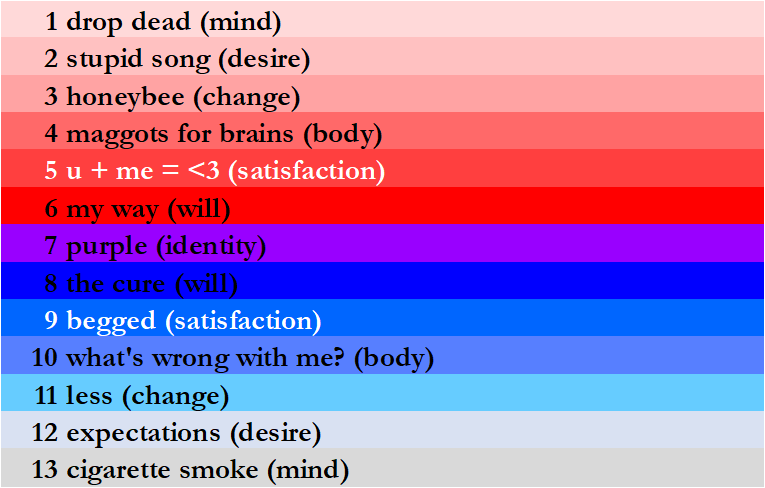
Social exchange theory views interpersonal relationships in quasi-economic terms. Relationships give us rewards: affection, status, support, gifts, belonging, etc. But, relationships also carry costs, whether it’s the emotional toll of listening to an upset friend, paying the restaurant bill at the end of a date, or the time and effort spent helping someone move their things.
According to the theory, we calculate the approximate rewards we get and subtract the costs, keeping a sort of “balance sheet” that tells us the “bottom line” of the relationship. Are we making a “profit,” or is this relationship a “loss”? We then compare that bottom line to what we expect to get out of the relationship, and if we’re meeting “expectations” (… more on that later…), we’ll be happy; if not, we’re unhappy. And, we also compare that bottom line to our forecast about what we could get elsewhere. If another relationship would give us a better “profit,” we might dump our current relationship and seek another.
Both “u + me = <3” and “begged” show Olivia running this cost/reward analysis in the spreadsheet of her mind. In “u + me,” the Board will be happy because profits are looking good. She’s excited about how he will “take [her] out to dinner” and “take her anywhere”; she anticipates that he will “buy [her] silver jewelry and all [her] favorite Cadbury.” Meals, bling, and chocolate; it’s a windfall! And she even gets a new big sister, too. No wonder she is satisfied, and she is committed, too, with “the feeling that [she’ll] never want somebody else.”
But by “begged,” her commitment (or “devotion”) remains, though her satisfaction has faltered. Per social exchange theory, she doesn’t see a better option than her current partner, but he certainly isn’t meeting her expectations, “overwhelmed” and “underfed.” No longer is she enamored with the idea of her man taking her out to dinner, instead preferring “to sit here silently and watch movies on TV.” Yes, she “will take what [he’s] giving,” but as the title of the song says, she’s only getting her meager relational profit because she “begged.” Like stockholders who expected the company to make $50 million last quarter when it only got $10 million, she’s dissatisfied with the bottom line.
So, while in “u + me” she dismisses those who say that “modern love’s a cruel endeavor,” in “begged” she wonders if it is a normal thing to fight against love becoming dreadful. In “begged” she’s hurting; in “u + me,” the opposite, as “wounds are healing.” And in “u + me” her satisfaction drives her to impatience, getting “way too far ahead of myself” and even pondering marriage at the age of 25, while in “begged,” her dissatisfaction generates a sort of stoic, patient pretending.
In a ring structure, the echoes point back toward the pivot point (here, track 7, “purple”). In “u + me” she is rushing forward in the car without a brake (see “stupid song”), and she’s even carving their names into the seats. It’s exciting and fun, but it foreshadows danger. Meanwhile, “begged” looks back on the wreck, wondering if there is a way to rescue a relationship that has become static from overattachment. One variant of social exchange theory predicts that relationships are most satisfying and stable when partners have roughly equal costs and rewards. “Begged” is a picture of a relationship without such an equitable distribution of relational profits; but, I would argue that “u + me” suggests they really never did.
Other posts:

